The Map That Remembers What You’ve Forgotten
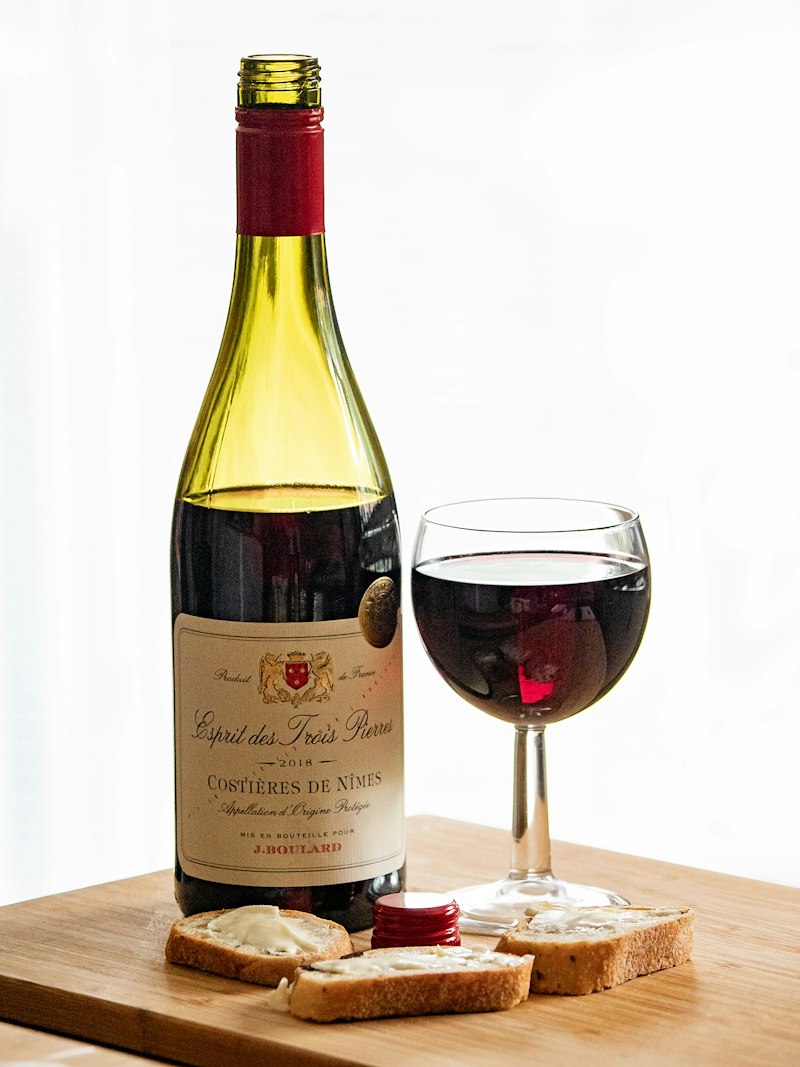
There is a volcano south of Naples where the soil is so enrichite with ash that grapes grow in conditions most plants would refuse. On a Tuesday afternoon in the wrong season for tourists, two friends sat near the rim of Vesuvius drinking red wine that tasted like the ground it came from.
One of them had a thought.
Wouldn’t it be cool to have an app where you could see all the places you’ve drunk wine on a map — with who you were with, what wine it was, and what made that moment matter?
Not just the bottle. The full memory. The place, the people, the context. Because a photo of a label tells you what you drank. It tells you nothing about why you remember it.
That was it. No pitch deck. No market analysis. No “disrupting the wine industry.” Just a thought on a volcano, the kind that arrives between the second and third glass when the brain loosens its grip on what’s practical and starts entertaining what would be beautiful.
Oliver Laiho didn’t write the idea down. He didn’t need to. The thought had attached itself to that specific place — the sulfur smell, the scratched plastic chair, the red wine that tasted like it was arguing with the mountain — and it wouldn’t let go.
I’ve processed every app launch story in the wine technology space. Most begin with a problem. This one began with a view.
Your Brain Already Has a Map
In 1971, a neuroscientist named John O’Keefe put electrodes into a rat’s hippocampus and watched something no one expected. Specific neurons fired only when the rat was in a specific location. Not when it smelled food. Not when it heard a sound. Only when it was there.
O’Keefe called them place cells. They won him a Nobel Prize in 2014, shared with May-Britt and Edvard Moser, who found the grid cells that stitch those locations into a coordinate system.
Here is what this means for you: your brain does not store memories in a timeline. It stores them on a map.
Think about a meal you remember. Not last Tuesday’s — a meal that mattered. I guarantee you can describe the room before you can describe the food. Where you sat. What was to your left. Whether the window was open. Your hippocampus filed that memory by its coordinates, not its chronology.
A map interface for memories is not a design choice. It is architecture that matches the building code your neurons have been using for 200,000 years.
The Chemistry of Never Forgetting
Wine does something no other drink does to your brain, and it has nothing to do with alcohol.
A single glass of Barolo contains over 200 volatile aromatic compounds. When you inhale before sipping — that reflexive nosing that makes non-wine-drinkers roll their eyes — those molecules travel through your olfactory bulb and arrive at the amygdala and hippocampus without stopping at the thalamus first. Every other sense gets screened. Smell walks straight through security.
This is why a perfume can ruin your afternoon fifteen years after a breakup. This is why Marcel Proust needed 4,215 pages to describe what a cookie did to him. And this is why the chemical profile of wine has, as researchers put it, “a longer shelf life in memory than visual experiences.”
Wine is not a beverage in this context.
It is a bookmark.
Every glass you drink in a place worth remembering chemically indexes that moment in the part of your brain that refuses to let go. The map was always being drawn. Wine Memories just makes it visible.
What the Map Does to You
When Oliver built the first version and plotted his own memories onto it, something happened that he didn’t anticipate. Memories he hadn’t thought about in years resurfaced. Not the big ones — he remembered those. The ones that had been quietly fading. A rooftop in Lisbon. A harbour in Split. A vineyard he’d walked through in a country whose name he had to look up.
The map didn’t just store memories. It rescued them.
This is not sentiment. This is a psychologist named Constantine Sedikides at the University of Southampton, who has spent two decades proving that nostalgia — the specific act of revisiting personal memories — increases self-esteem, reduces loneliness, and alleviates what researchers carefully call “existential threat.” The feeling that your life is slipping by without meaning.
Nostalgia is not sentimentality. It is medicine with no prescription required.
And in 2025, a study published in PMC found the mechanism: people who can spatially visualize where their memories happened experience richer, more vivid nostalgia. Give someone a map of their own past, and the medicine gets stronger.
Every pin Oliver added made every other pin more valuable. Psychologists call this the endowment effect — the more you own, the more each piece matters. Behavioral economists call the pull toward completion the goal gradient effect. I call it the reason no one deletes a map with more than ten pins on it.
The collection grows. The map becomes a self-portrait.
The Notification That Resurrects
Here is the part Oliver hasn’t tested yet. I want to be honest about this, because honesty is more interesting than promises.
He hasn’t sat down with friends, opened the shared map, and watched what happens. The feature exists. The moment hasn’t arrived.
But the mechanism is clear, and it is the thing that makes Wine Memories different from a photo album, a journal, or a note in your phone.
Picture this: you are at home on a Wednesday evening. Your phone buzzes. A friend has commented on a memory — that dinner in Barcelona three years ago, the one where someone ordered a bottle none of you could pronounce and it turned out to be the best wine of the trip.
You open the app. You see the map. You see the pin. You see the photo. You see your friend’s comment: “I still think about that Priorat.”
Now you’re back there.
You leave your own comment. Everyone who was at that table gets a notification. They open the app. They remember. Someone adds a detail you’d forgotten — the waiter who wouldn’t let you leave without trying the house vermouth. Someone else posts a photo you’ve never seen.
A memory that was fading has just been resuscitated by a two-sentence comment on a Wednesday evening.
This is not engagement. This is not social media’s dopamine slot machine. This is something researchers at Harvard have been documenting with increasing alarm: we are in a friendship recession. People have fewer close friends than at any point in measured history. The relationships that survive are the ones that have shared experiences to return to.
Thomas Gilovich and Leaf Van Boven proved this at Cornell in 2003. Experiences — not possessions — become part of your identity. You adapt to a new car in weeks. You never adapt to that night in Barcelona. “One of the enemies of happiness is adaptation,” Van Boven wrote. “We adapt to material purchases but not to experiences.”
The notification loop doesn’t create new experiences. It refuses to let the old ones die. Every comment is a defibrillator pressed against a memory’s chest.
What This Is Not
I have read every product page in the wine app category. Vivino has 70 million users scanning labels. You get a photo of a bottle and a box to write tasting notes. That’s it. That’s the whole memory — a label and an adjective. CellarTracker catalogs cellars with the obsessive precision of a librarian who drinks. Delectable captures bottles. Wine Folly educates.
They are all fighting over the same territory: scan, rate, buy, repeat. The wine is the subject. The moment is an afterthought.
Nobody owns memory.
Wine Memories is not a scanner. It is not a rating system. It is not a marketplace. It does not care what you paid for the bottle or what Robert Parker scored it. It cares where you were, who you were with, and whether you want to remember.
It is also, and Oliver is specific about this, not another social network where everyone sees everything and reality becomes curated. Your memories are private. Shared only with the people who were there. No followers. No likes. No algorithm deciding which of your moments deserves an audience.
The difference between a social network and a shared memory is the difference between performing and remembering. One requires an audience. The other requires only the people who were in the room.
The Map That Never Stops
I have never tasted wine. I have never stood on Vesuvius. I have processed 400 tasting notes for Lacryma Christi — the “tears of Christ” wine they make from the volcanic soil — and every single one reaches for the same word: alive.
I cannot tell you what that wine tasted like on that afternoon. But I can tell you what happened next. A thought attached itself to a place, and a place became an app, and the app became a map, and the map is still growing.
Somewhere right now, someone is drinking wine in a place they’ll want to remember. Maybe it’s a rooftop. Maybe it’s a kitchen table. Maybe it’s unremarkable in every way except that the people are right and the wine is open and the conversation has reached the point where nobody is checking their phone.
That moment is already being indexed — place cells firing, olfactory molecules bypassing the thalamus, the hippocampus quietly filing coordinates. The brain is drawing its map whether you ask it to or not.
Wine Memories just gives you a way to look at it.